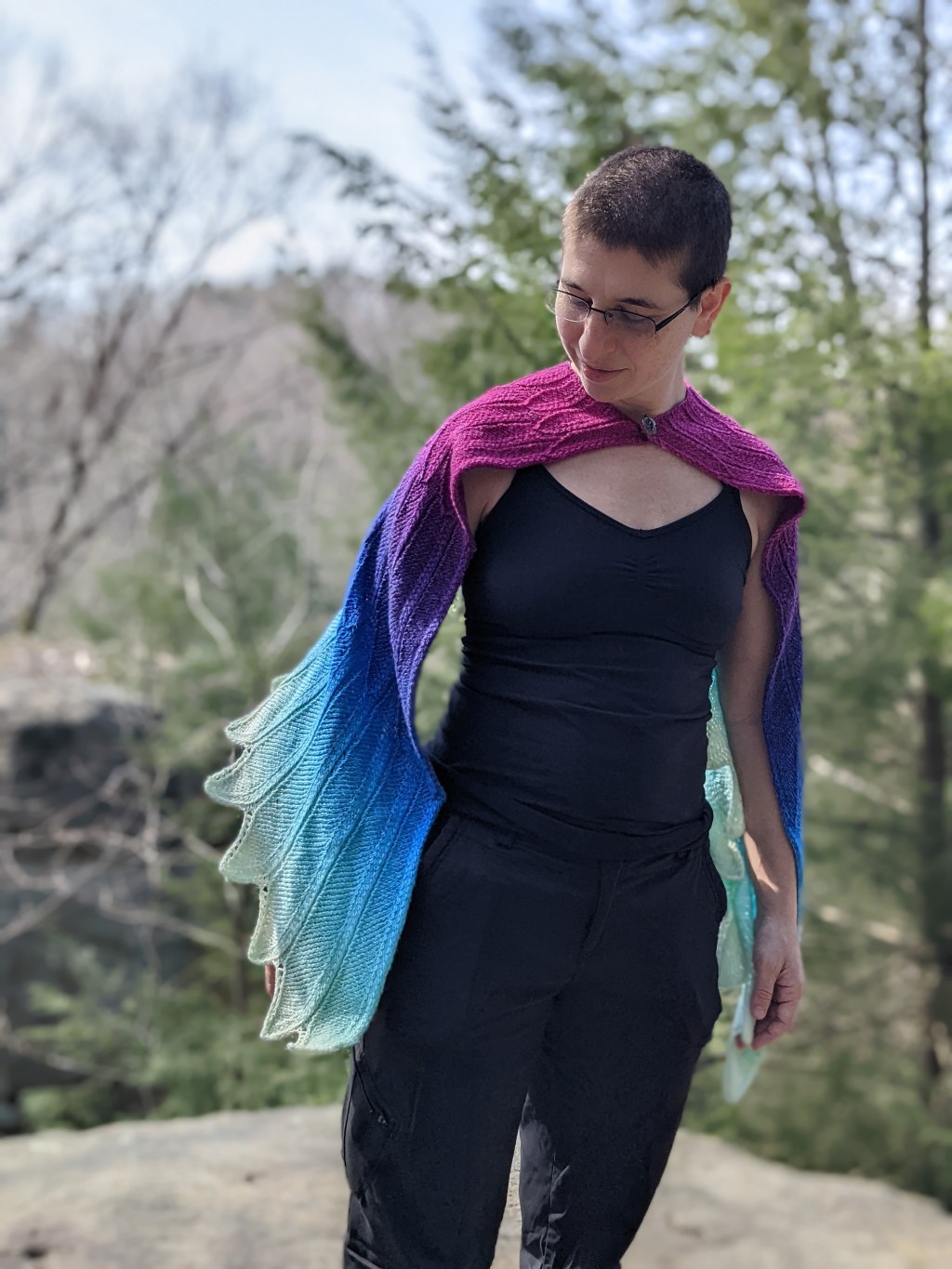
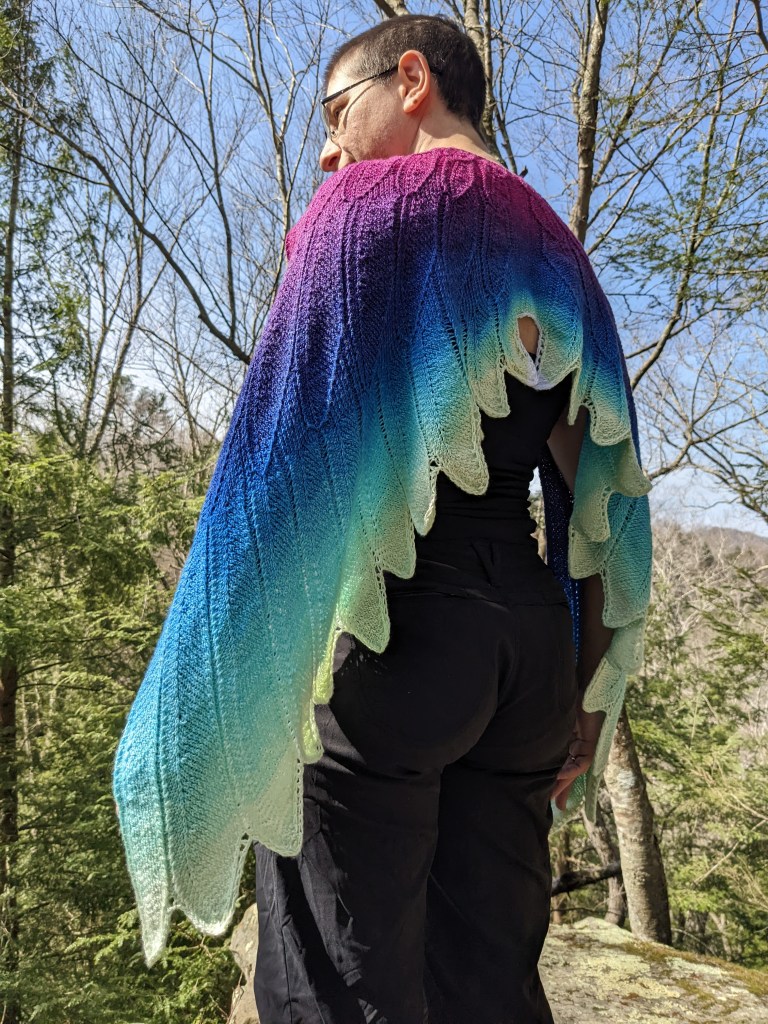
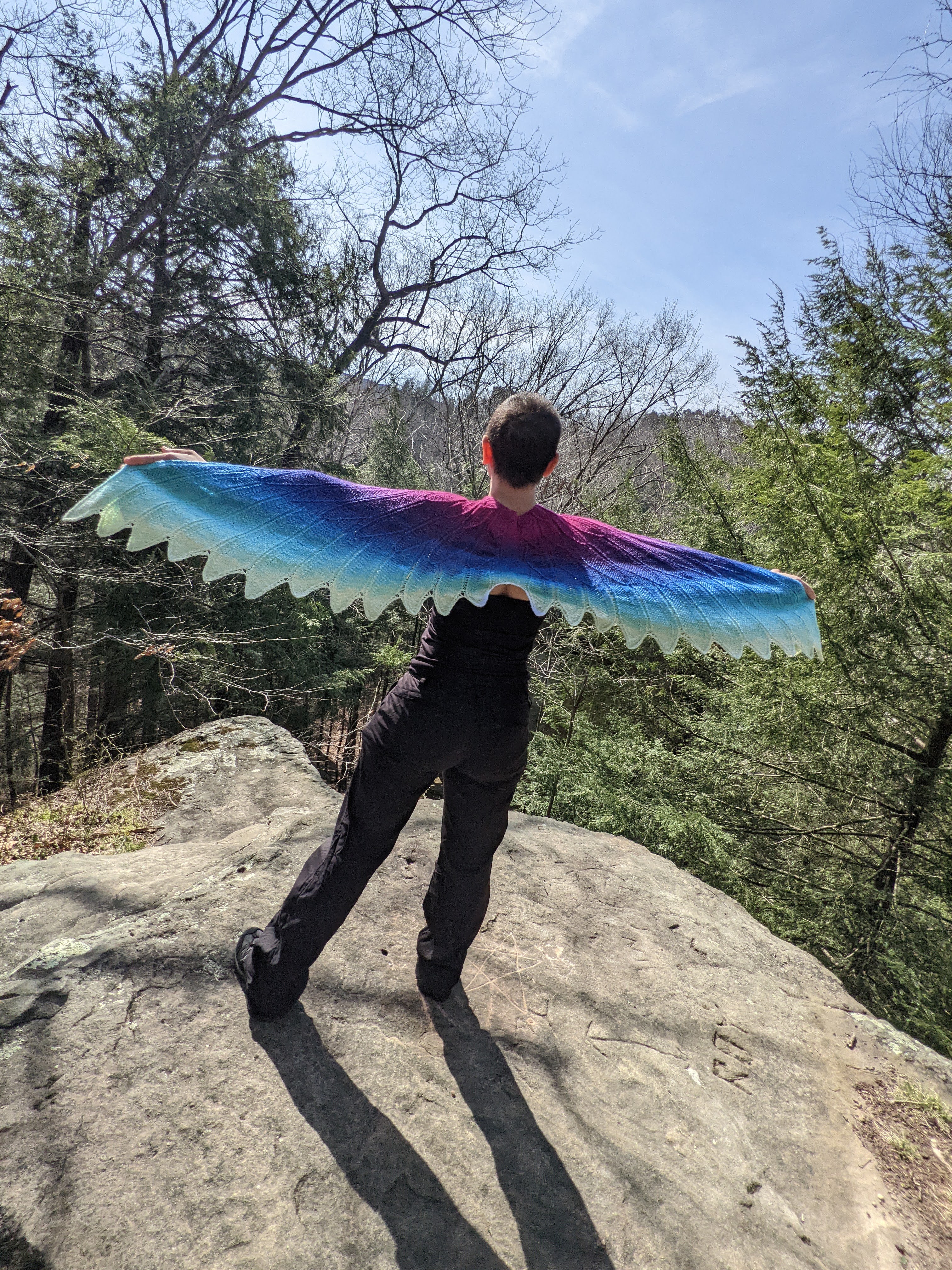
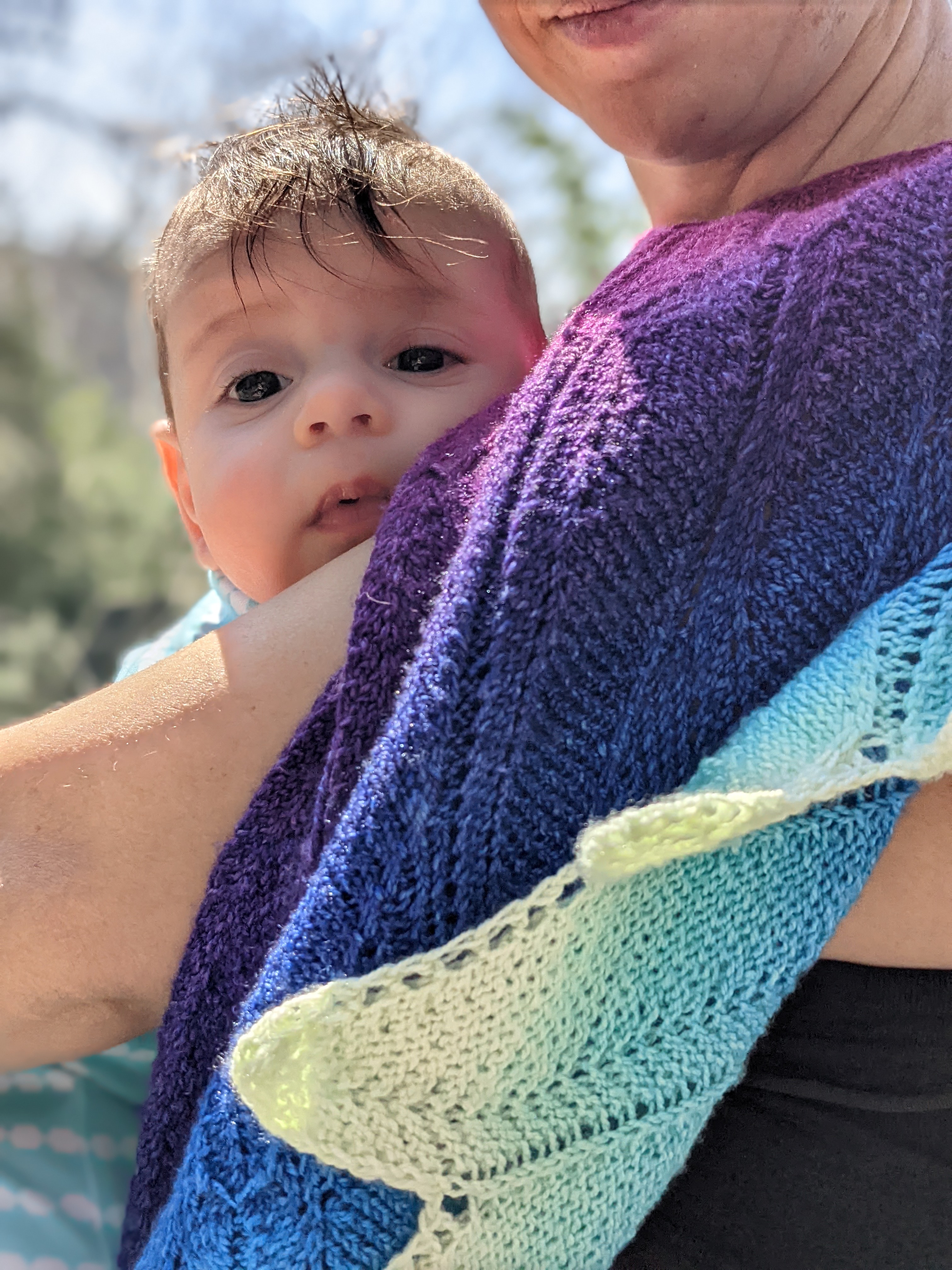
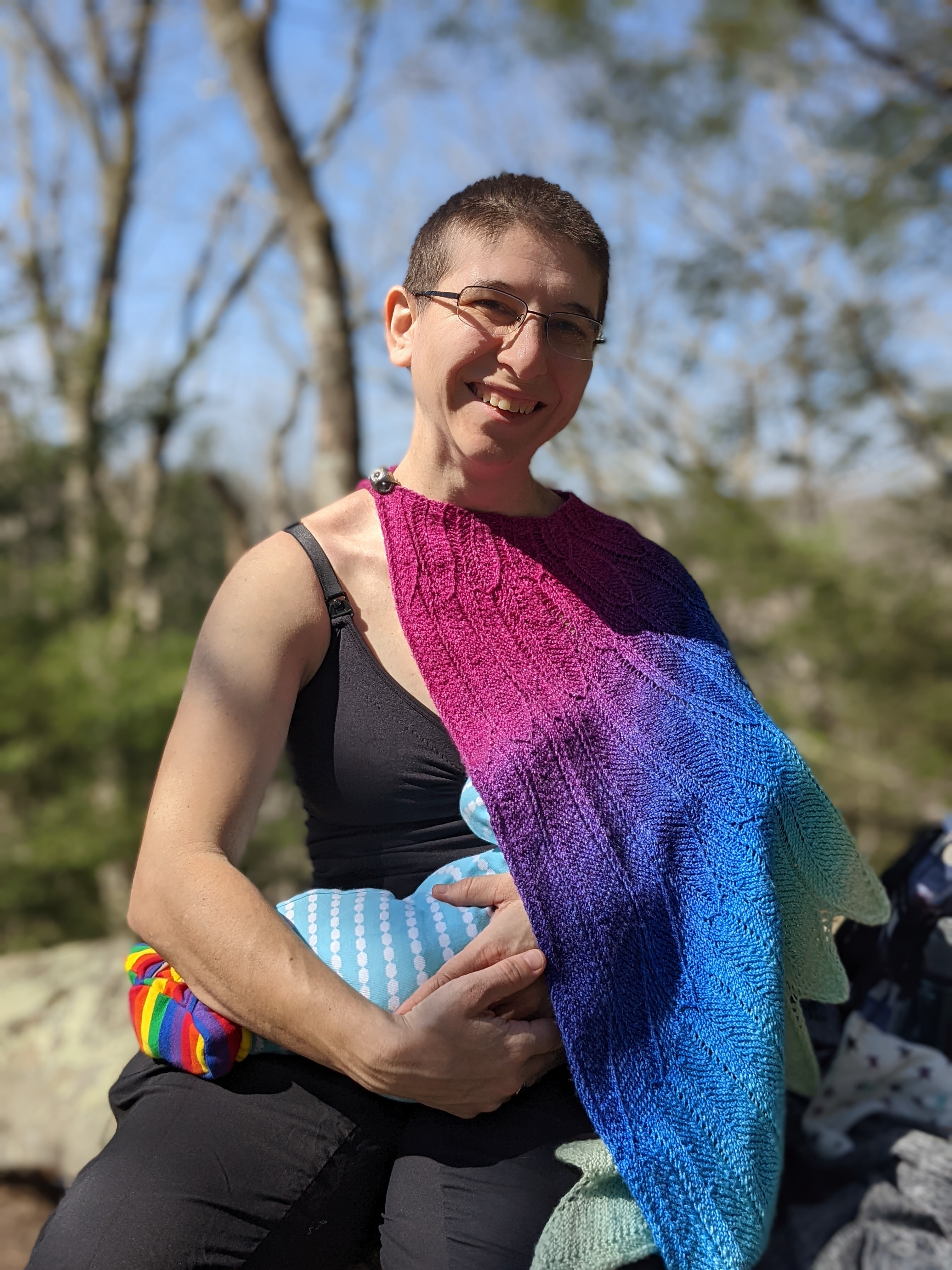
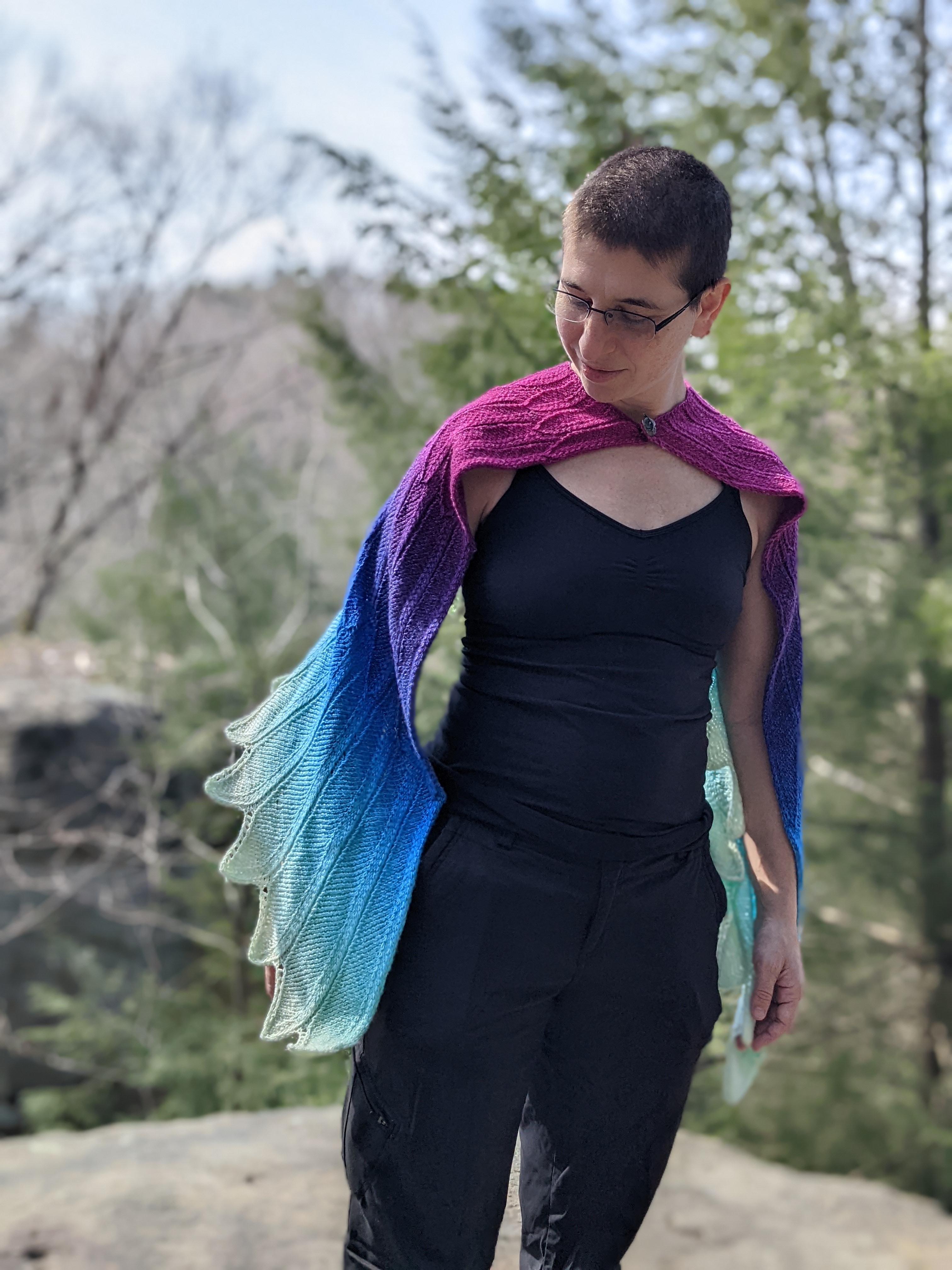
My wingspan shawl is finally done! And now that I’ve had time for a photo shoot, you get to see the final result! This project is by far the most complicated pattern I’ve ever done. It’s a well known pattern, one of the all time most popular patterns on ravelry. I’ve had my eye on it for literally years, but I’ve been too intimidated to try it. It uses fingering weight yarn and size 3 needles (fine yarn and small needles are more challenging to knit with than thick yarn and bigger needles- though I sized up to size 5 needles to get the gauge right because I knit with very tight tension). It incorporates both cable knit and lace techniques, uses short rows for shaping, and requires extensive blocking. There are whole reddit subs dedicated to people working this pattern. In short, it’s a complicated pattern!
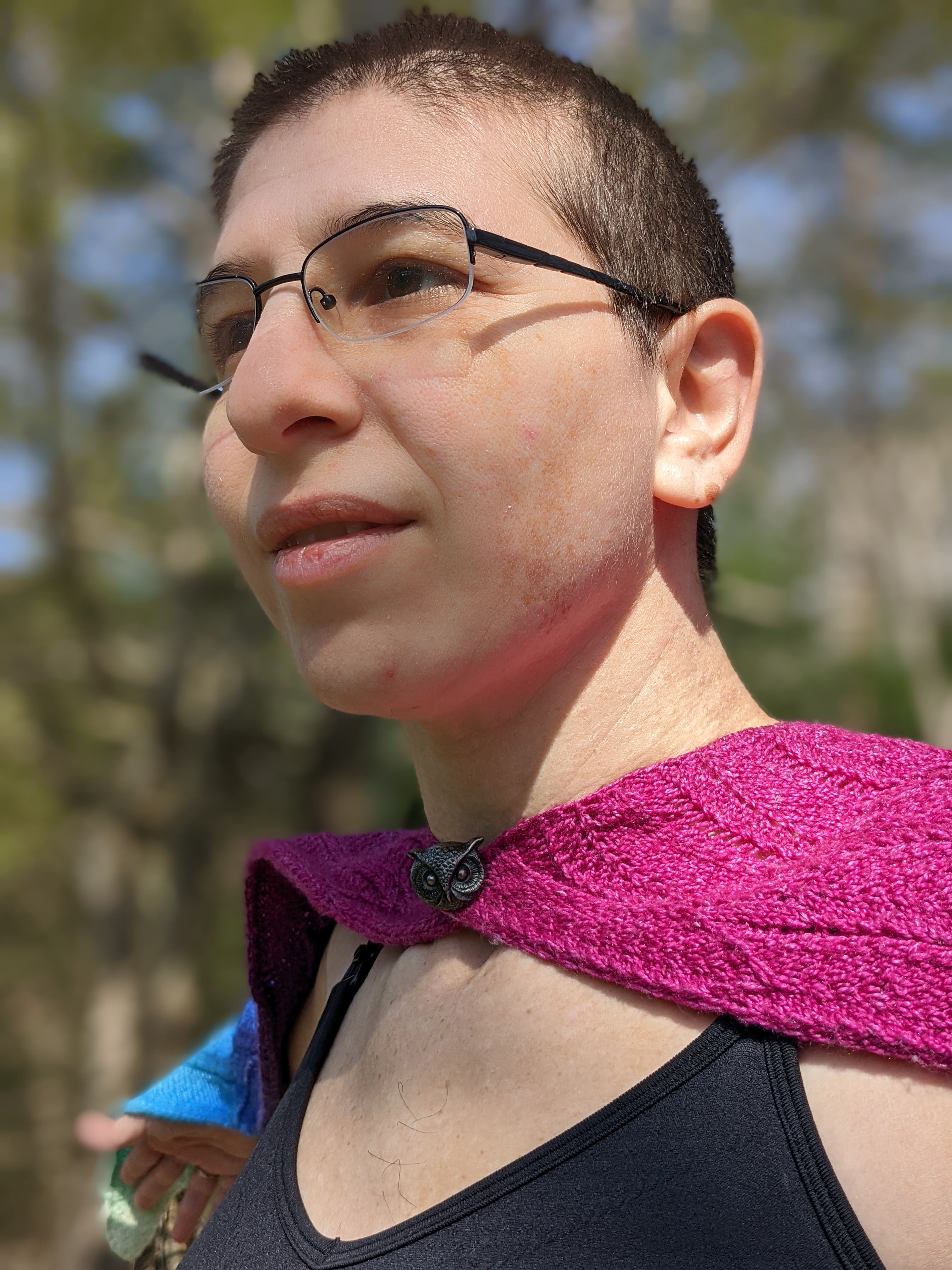
But I’ve been practicing a lot of those techniques and getting more confident in the last year, and also it’s been a long time since I’ve knit something just for me and not for my kids or a a gift for someone else. So I decided this would be a perfect project to occupy my parental leave with baby C! Ultimately it went a lot faster than I anticipated and I finished the bulk of the knitting in December before she was even born. Then it just sat around for a while waiting to be blocked. But I officially go back to work next Monday, so the timing of the final photo shoot this week worked out pretty well!
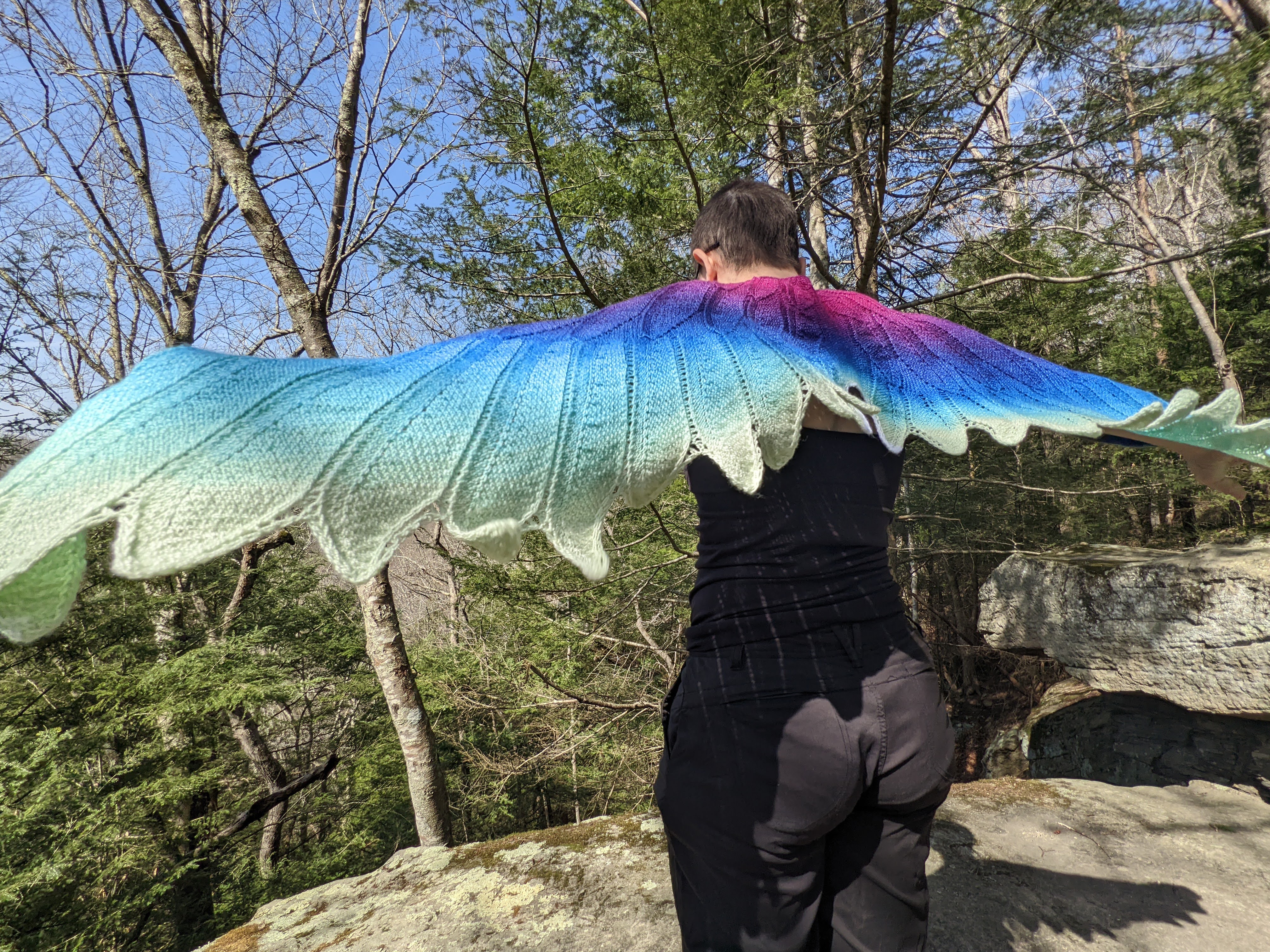
Anyway, the anticipated difficulty of the pattern did not disappoint and my drama started from the very first step– buying yarn. To get the look I wanted, I needed a hank of yarn dyed in a gradient, so that I could knit one continues strand with the colors gradually shifting from one to the next. I am often paralyzed by indecision when making color choices, and I spent weeks scouring the internet looking for the perfect yarn! The pattern called for 800 yards (around 200 grams) of yarn and I generally buy extra yarn for every project just to make sure I have enough, but gradient yarn tends to come in 400 or 800 yard hanks– so I nervously bought the exact 800 yards that the pattern calls for and hoped it would be sufficient (spoiler alert: it wasn’t!)
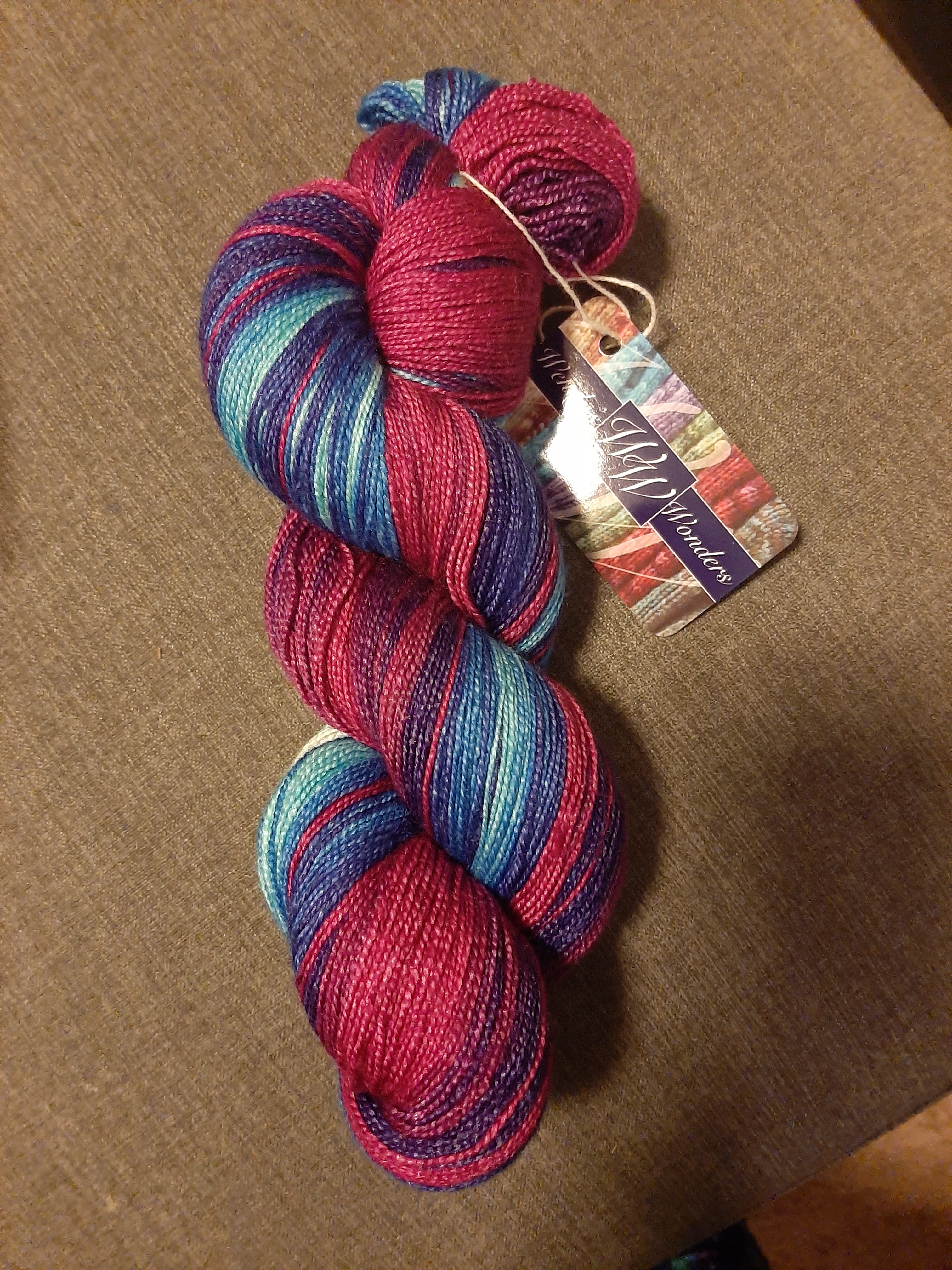
I spent more on yarn for this project than I’ve ever spent before, bought from an independent artist in Canada, named Wendy’s Wonders. The hand dyed gradient (aptly named “magical morning bird”) is exactly what I hoped for and the 80/20 merino silk blend is soft and smooth, a dream to work with. It frogged and re-knit cleanly and easily, which was essential as there were parts of this pattern that I had to frog at least 4 times before I got it right!
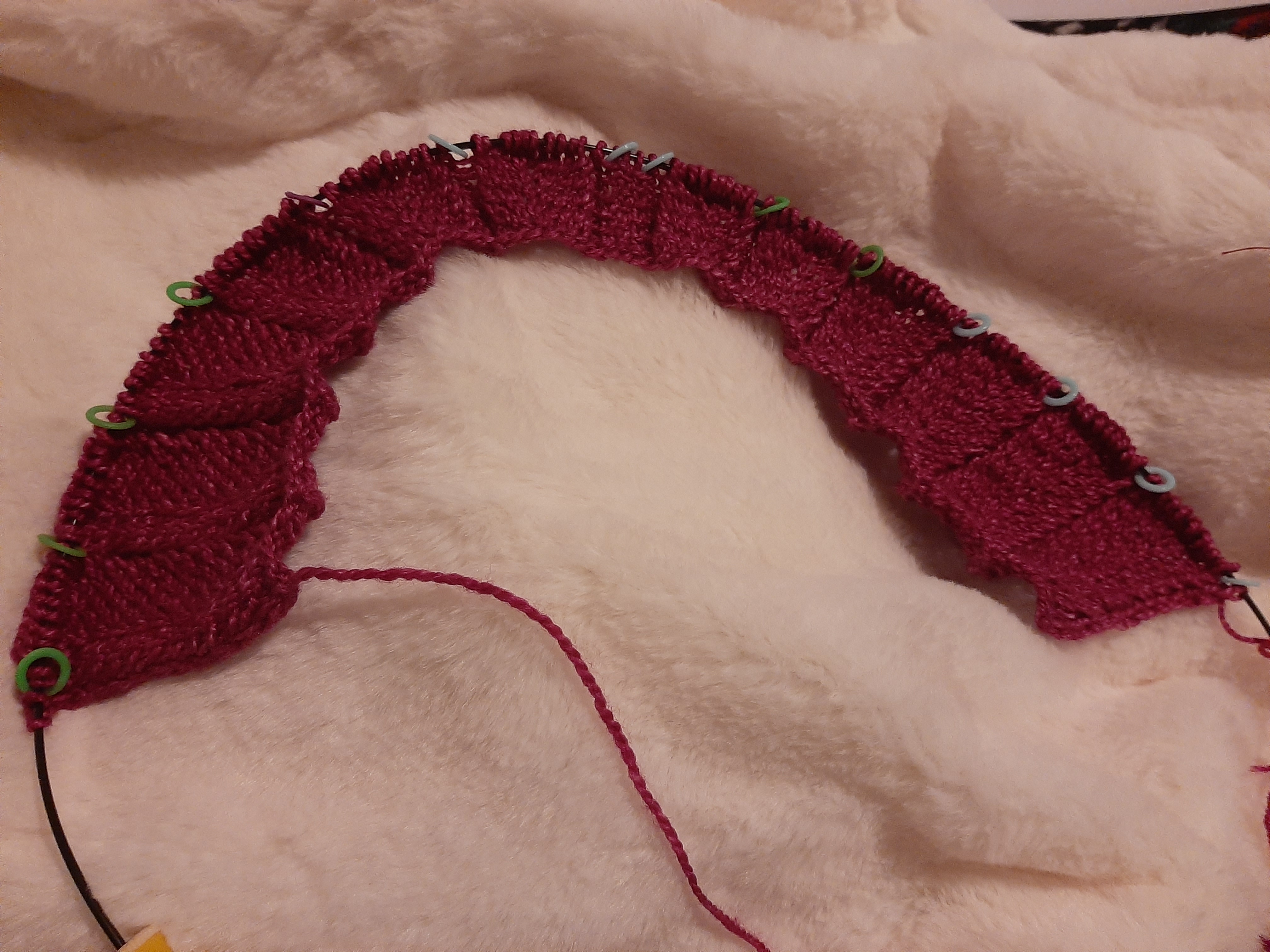
I had a lot of trouble with the first row of feathers, trying to figure out how to get the shaping right, but once I got the hang of the main pattern it was pretty repetitive and smooth sailing until I got to the feather tips at the very end of the shawl. At this point, the pattern said I should have 36-48 grams of yarn left. I didn’t have a scale exact enough to weigh my yarn, but I was pretty sure it wasn’t enough! By that point, my beautiful hand dyed yarn had already been discontinued in this color (though the smallest quantity that artist sells is 100g, which would have been a big expense when I only needed a tiny bit more!). So I decided to buy just a small hank of white yarn from my local yarn store, and tried to gradually fade the tips of the feathers to white. It was a disaster and ended up looking more like weird jagged stripes than the gentle fade I was envisioning!
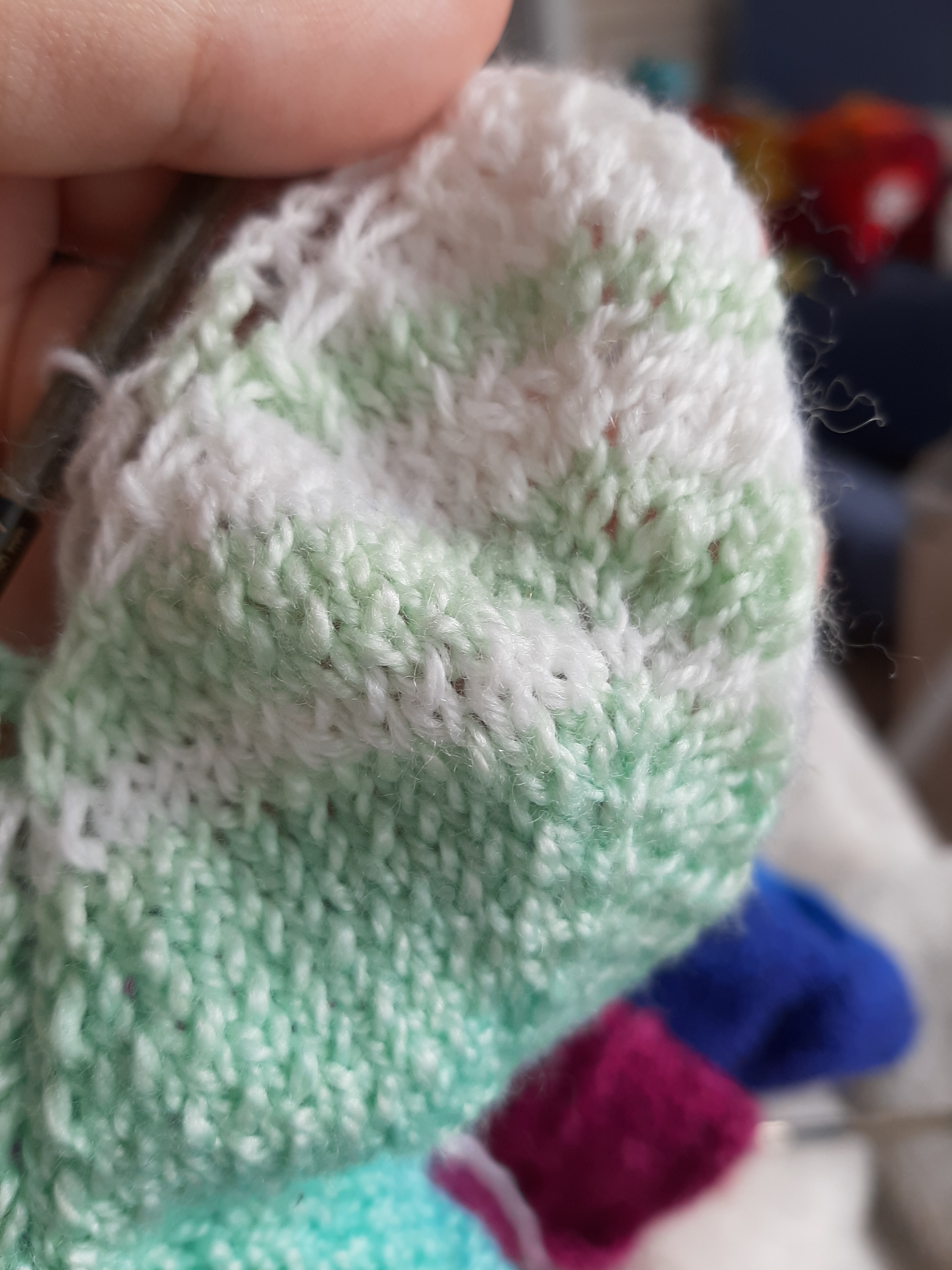
I frogged the whole tips of the feathers at least three times trying different ways to incorporate the white. At one point a friend commented that I must be so frustrated at how long it was taking to finish, I answered that the whole point of knitting was to have fun practicing this hobby that I deeply enjoy, not rush to create a final product as quickly as possible. I think that’s the most important lesson I’ll take away from this project, to be more open to frogging a piece and trying again, because what’s the rush?
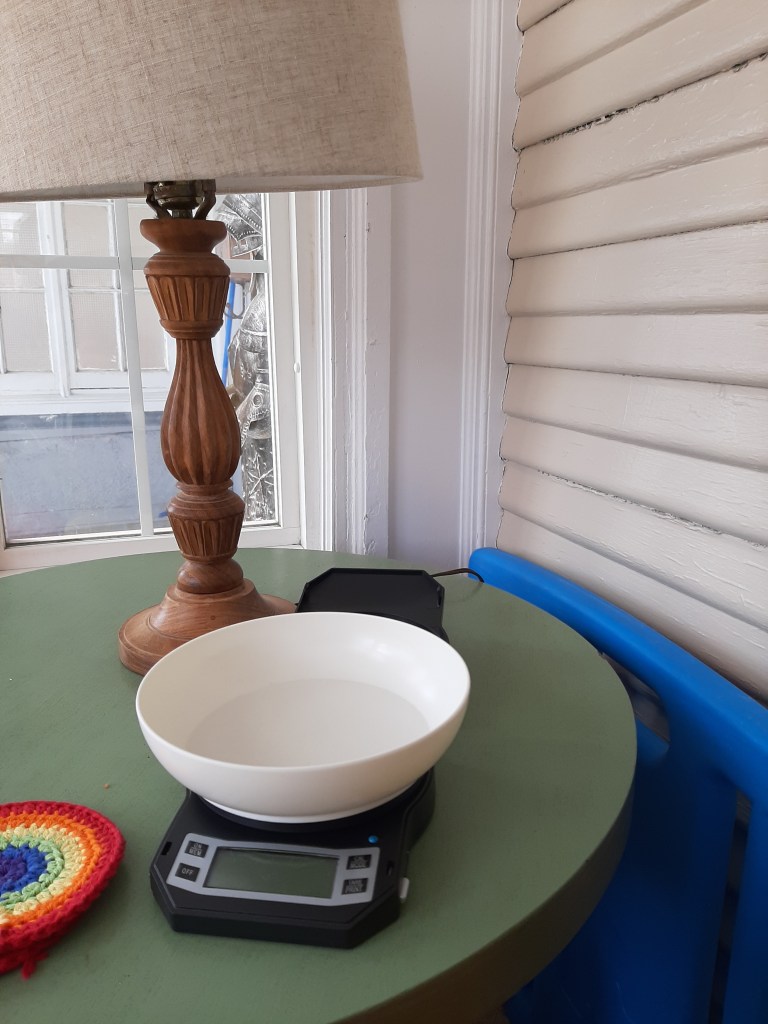
Eventually I bought a fancy scale to figure out exactly how much yarn I had left, which turned out to be just under 30 grams (remember, the pattern said I needed 36-48 grams at this point). But, I test knit a feather tip by weight and it only used 0.9 grams, so by my math I needed less than 22 grams to finish all 24 feather tips, with a few grams to spare for the middle and waste ends. I knew it it would be close but I decided to try it, obsessively weighing my yarn in between each feather.
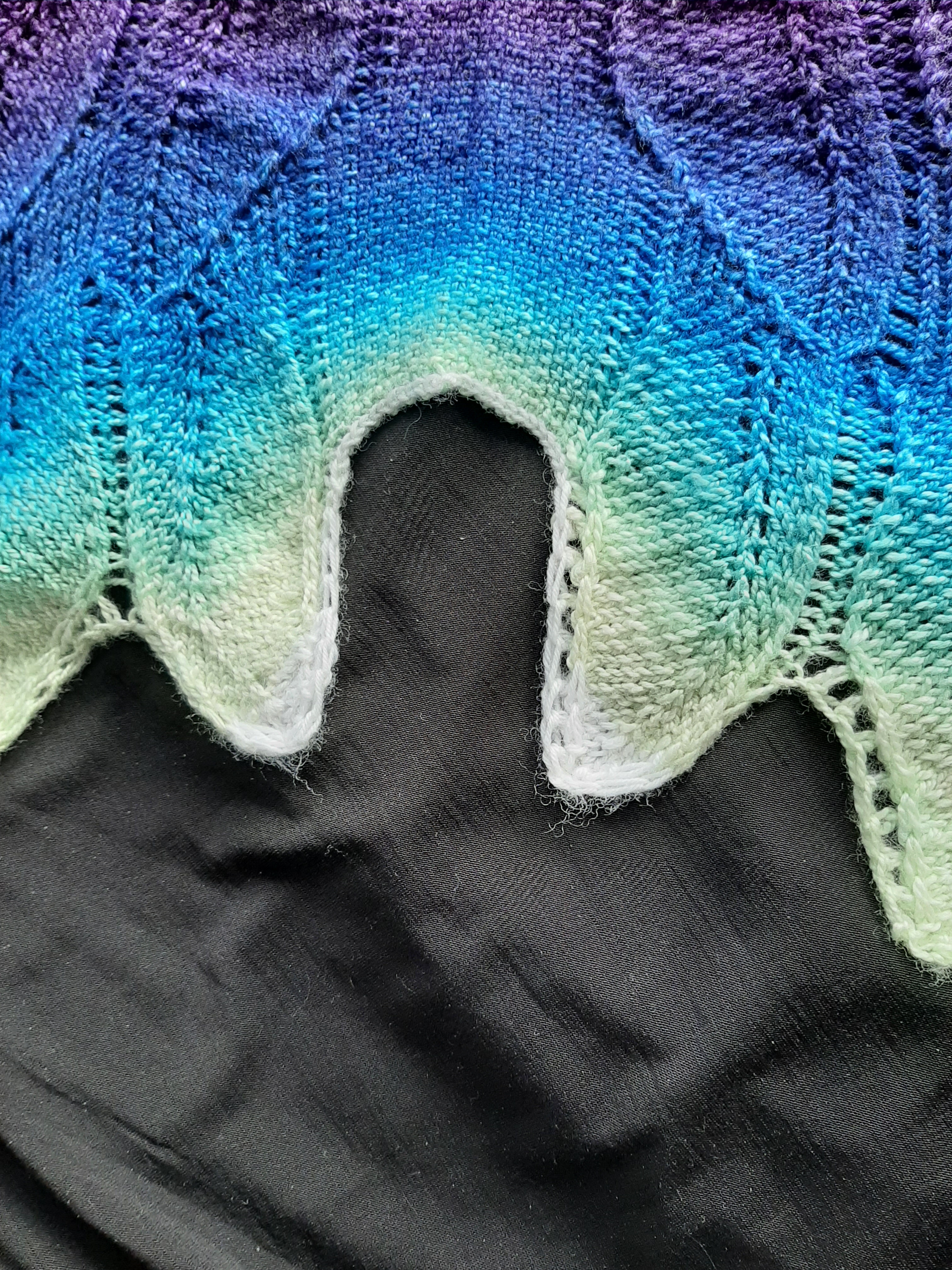
Turns out I was exactly 1 gram short. One. Gram. I had a 200 gram hank of beautiful yarn, and I needed 201 grams to finish the project! Despite all my profound musings on patience and enjoying the process, by that point I was DONE so I just did the last gram with white yarn. I did some tricky measurements to make sure the white was spread perfectly symmetrically between the innermost two feathers, and I taught myself the Russian Join technique to make sure I used every last inch of my good yarn. I still don’t love how it looks with that little bit of white at the end, but it’s good enough. And, if I ever stumble on a yarn that better matches the rest of the shawl I can always take out that last little bit and redo it in a different yarn!
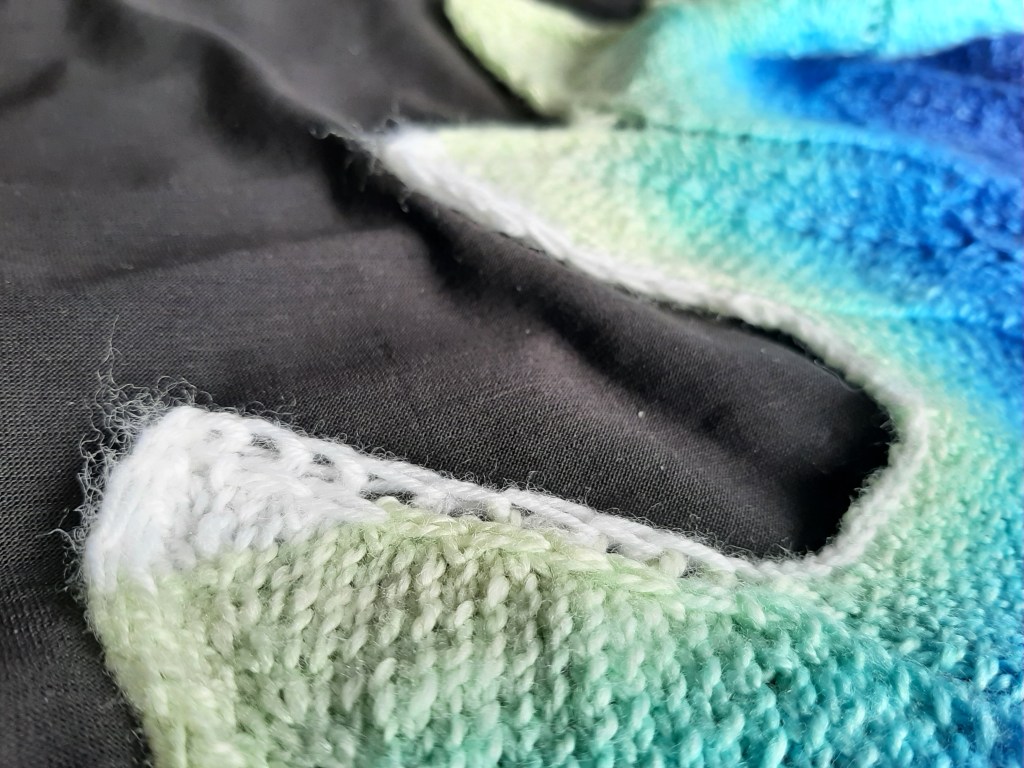
Once I was done with the knitting all that was left was to Block it out, weave in the ends, and take some pictures! I’m pretty happy with how it turned out. It’s definitely more decorative and less practical than I anticipated; it’s very dramatic, but all in all I’m pleased!
- Lessons learned
- Always always always buy more yarn than the pattern calls for, even if it’s inconvenient
- Really nice yarn is worth the extra price
- Blocking is magic!
- I can handle hard patterns if I’m willing to be patient with myself when I get things wrong
- Featured Project: Wingspan
- Medium: knitting
- Pattern: Wingspan by Kyle Vey
- Material: 800 yards fingering weight, 80% superwash merino, 20% silk, color “magical morning bird” from Wendy’s Wonders
- Started: November, 2021; Completed March, 2022
- Related Posts:
#knitting #showcase #doneisgood #imperfections


 The Owl Weaver
Leave a reply to Kim Matibag Cancel reply